
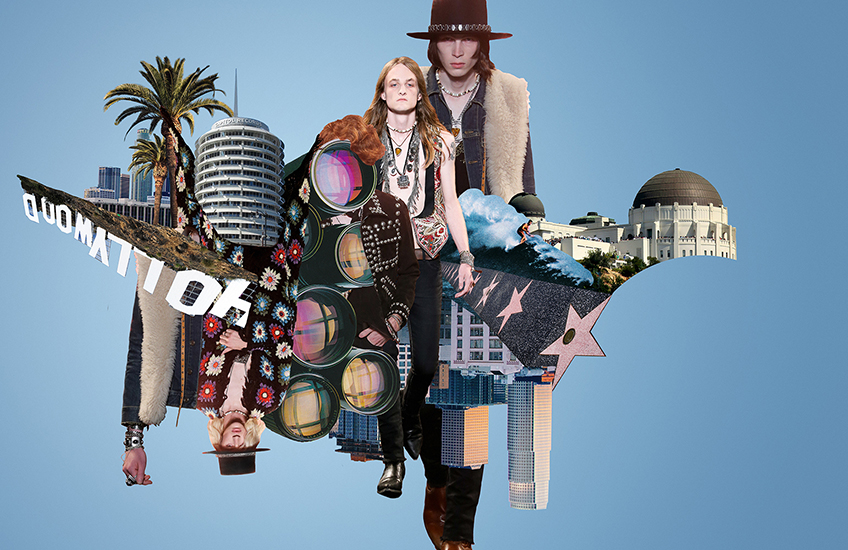
GQ Style is a men’s fashion and style magazine, originally created as an offshoot of the magazine GQ (Gentlemen’s Quarterly). It focuses on high-end fashion, trends, and lifestyle for a male audience, and has been published in several international editions. Established in the mid-2000s, GQ Style has expanded from a biannual print supplement to a stand-alone brand with global editions, digital platforms, and fashion collaborations. This article covers its origins, major editions, international versions, brand extensions, and cultural impact, presented in a neutral, encyclopedic tone.
Origins and Background
GQ Style was conceived under the umbrella of GQ magazine as a response to growing male interest in fashion. In September 2005, British GQ (Condé Nast U.K.) launched the first edition of GQ Style as a dedicated men’s fashion publication (GQ Style - New Bi-Annual Magazine | the Fashion Spot) (i-D editor Ben Reardon to take over at GQ Style - Press Gazette). GQ editor Dylan Jones described the new title as a necessary offshoot: “GQ is a lifestyle magazine… but we felt it was time for a dedicated men’s fashion magazine. We believe there is now the market for this. Ten years ago, it was seen as quite avant-garde, but men are more style-conscious than they used to be.” (GQ Style - New Bi-Annual Magazine | the Fashion Spot) The British edition was introduced as a glossy, advertising-rich biannual magazine timed with fashion seasons, aiming for modest sales of 50–70,000 in its early print runs (GQ Style - New Bi-Annual Magazine | the Fashion Spot).
Following the U.K. success, Condé Nast rolled out GQ Style in other markets. In the United States, GQ experimented with a special preview issue often referred to as “Issue Zero” in 2014, testing the concept for the American audience (Introducing GQ's What to Wear Now, a New Biannual Magazine | GQ). This pilot was essentially a supplement to GQ that focused exclusively on seasonal style advice (“What to Wear Now”), filling the gap between GQ’s monthly fashion coverage and the fast-paced menswear industry. By late 2014, GQ’s editor-in-chief Jim Nelson confirmed the U.S. GQ Style as a “new biannual magazine”, with a Fall/Winter 2014 issue following the initial preview (Introducing GQ's What to Wear Now, a New Biannual Magazine | GQ). These early editions served as a blueprint, indicating why GQ launched GQ Style: to “seasonally adjust your style radar” for readers and provide a big-picture guide to essential trends (Introducing GQ's What to Wear Now, a New Biannual Magazine | GQ). The positive reception of the trial issues led Condé Nast to invest further in GQ Style as its own title.
Magazine Editions
United States (U.S. Edition): The U.S. GQ Style began in earnest after the 2014 preview issues, first as a biannual print magazine and later expanding its frequency. The Spring/Summer 2015 issue was billed as the third edition of this “new-ish” magazine (The Third Issue of GQ Style is Here | GQ), confirming that two issues were released in 2014. Initially published twice a year (to coincide with Spring/Summer and Fall/Winter fashion seasons), the U.S. edition offered extensive trend reports, style tutorials, and celebrity features in a premium format. In late 2015, Condé Nast announced that GQ Style (US) would increase its frequency to quarterly publication (Will Welch named editor in chief of GQ Style- POLITICO Media). This shift came alongside a strategic refocus of the company’s men’s portfolio: Details magazine (another men’s lifestyle title) was shut down, and its resources and staff were redirected to bolster GQ Style (Will Welch named editor in chief of GQ Style- POLITICO Media). Longtime GQ stylist Will Welch was appointed the first editor-in-chief of GQ Style (US) in December 2015 to lead this expansion (Will Welch named editor in chief of GQ Style- POLITICO Media). Under Welch’s tenure, GQ Style shifted to four issues per year and developed a stronger digital presence, including the launch of a dedicated website (gqstyle.com) that absorbed Details’ online content (Will Welch named editor in chief of GQ Style- POLITICO Media). The U.S. quarterly GQ Style formally debuted its revamped format in Spring 2016 – marked by a high-profile launch party in New York City – and was positioned as “your new blueprint for thriving” in the world of menswear and luxury style (Inside the GQ Style Launch Party Photo Booth | GQ). The U.S. edition’s print run has featured notable cover personalities (actors, musicians, and style icons) and avant-garde fashion editorials that distinguish it from the main monthly GQ. In 2018, Will Welch’s success at GQ Style led to his promotion to creative director, and later editor-in-chief, of GQ itself (GQ - Wikipedia), underscoring the influence of the spinoff on the parent magazine’s evolution.
British Edition: The British GQ Style is the original edition, launched in 2005, and is published by Condé Nast Britain. It has always been a biannual (twice-yearly) magazine, aligned with the spring/summer and fall/winter fashion calendars (GQ Style Magazine Subscription). British GQ Style quickly became the U.K.’s most successful men’s biannual style magazine, delivering comprehensive seasonal fashion coverage. By 2016, it was noted that GQ Style had been “bringing you a biannual update on all the latest men’s trends… for the last eleven years” (Inside the GQ Style autumn winter launch party | British GQ | British GQ). Over its history, the U.K. edition has seen a few editorial changes: for example, David Bradshaw was the founding editor (overseeing the first 11 issues from 2005) and was succeeded by editors like Ben Reardon in 2010 (i-D editor Ben Reardon to take over at GQ Style - Press Gazette) and later Luke Day (who took over in 2015). The British version maintains a reputation for cutting-edge fashion photography and has featured special collaborations with designers. It occasionally “relaunches” with fresh design or content tweaks, but it remains a key biannual style guide in the UK market.
Publishing History and Shifts: Across its editions, GQ Style’s publishing schedule has generally mirrored the fashion industry’s cycle. Most editions launched as biannuals, capitalizing on spring and autumn fashion weeks to inform their content. Notable shifts include the U.S. move from biannual to quarterly in 2016 (as detailed above) to provide more frequent coverage (Will Welch named editor in chief of GQ Style- POLITICO Media). Additionally, the integration of digital content has been a significant editorial shift. After 2015, GQ Style’s content was not limited to print; the brand’s online articles, videos, and social media extended its reach. This multi-platform strategy was partly a response to the closure of Details, ensuring GQ Style filled the void for menswear enthusiasts seeking continuous content. Editorially, GQ Style often delves deeper into fashion and luxury topics than the general-interest GQ, with longer-form interviews, lookbooks, and trend essays. The tone has been described as more experimental and fashion-forward, targeting “aficionados and enthusiasts alike” (GQ Style (UK) on the App Store).
Regional Variations and International Editions
The GQ Style brand operates on a highly fragmented global spectrum. Unlike the standardized format of the flagship GQ magazine, the Style vertical varies significantly depending on the local market. Publications range from massive, 350-page standalone "bookazines" to thin bundled supplements, or exist strictly as digital verticals. International editions are generally categorized into two distinct formats: standalone commercial magazines and supplementary inserts.
Standalone Editions
These editions function as discrete physical publications. They are sold separately from the flagship GQ magazine, feature their own dedicated mastheads, possess distinct ISSNs/barcodes, and typically carry a higher retail price point and page count.
- United Kingdom (Global Flagship): Launched in 2004/2005 as a biannual publication, British GQ Style is considered the aesthetic progenitor of the brand. It is widely regarded as the "gold standard" for the franchise's avant-garde identity and remains highly collectible.
- Germany: A technical powerhouse launched in 2002 (predating the UK edition). It operated as a massive, ~350-page biannual publication for twenty years. The print run was permanently discontinued in 2022 following a restructuring of GQ Germany.
- United States: Launched in 2016 to fill the market void left by the closure of Details magazine. It operated as a premium quarterly until Fall/Winter 2021, after which the print run was folded back into the main US GQ brand.
- China: A commercially successful biannual fueled by the Asian "fan economy." The edition is sold separately and frequently leverages "traffic stars" (pop idols) on covers to drive physical sales through fanbase mobilization.
- Italy: Often described as an industry bible, GQ Style Italia is a seasonal standalone tied heavily to Milan Fashion Week. It functions primarily as a guide spotlighting Italian tailoring and textile houses.
- Russia: Prior to 2022, this was a lavish biannual publication driven by the region's luxury boom. It ran for 30 standalone issues until Condé Nast ceased Russian operations in March 2022 due to the invasion of Ukraine.
- South Africa: The only edition on the African continent. Although sometimes academically categorized as "supplementary," it is sold as a standalone biannual. After a hiatus, it returned to print with Vol. 16 in November 2024.
- South Korea: Launched in 2012, this influential biannual documented the rise of K-Pop and "soft masculinity." While the physical print run is believed to have ceased circa 2016, it continues to produce high-end digital editorials.
- Regional Franchises: Spain, Poland, Taiwan, Thailand, and the Middle East (Dubai) have all maintained separately sold seasonal editions catering to specific local luxury markets. Australia previously operated a standalone annual (c. 2011) focused on rugged luxury, though it has largely transitioned to an integrated supplement model.
Supplements, Replacements, and Digital Editions
These editions utilize GQ Style branding but do not function as independent consumer magazines. They are typically poly-bagged with the main magazine, serve as temporary replacements, or exist solely as digital applications.
- France: To avoid market cannibalization of Vogue Hommes, GQ Style France pivoted strictly to digital distribution, selling seasonal issues via the App Store and Zinio rather than on newsstands.
- Turkey: Operates as a strict supplement; issues are physically bundled and poly-bagged alongside GQ Turkey and are not available for individual sale.
- Japan: Attempted a "one-off" bundled supplement attached to the May 2013 issue of GQ Japan. Plans for a full standalone launch were subsequently scrapped.
- Mexico & Latin America: Operates as a hybrid format. Evidence suggests 80-page special issues have occasionally replaced the regular GQ Mexico monthly issue or were distributed strictly as digital app issues.
- India: Primarily utilizes the moniker for digital video verticals (e.g., the YouTube "GQ Style Guide" series) rather than physical publishing.
- Brazil: Functions largely as a periodic lifestyle/resort supplement bundled within the main magazine.
Summary of Global Editions
| Edition / Market | Format Classification | Print Frequency | Status / Lifespan | Distinctive Characteristics |
|---|---|---|---|---|
| United Kingdom | Real Standalone | Biannual | Active (Launched 2004/05) | The avant-garde, highly collectible global flagship. |
| Germany | Real Standalone | Biannual | Defunct (2002–2022) | High volume (~350 pages); ended in 2022 restructuring. |
| United States | Real Standalone | Quarterly | Defunct (2016–2021) | Premium quarterly; absorbed back into main GQ. |
| China | Real Standalone | Biannual | Active | High-volume "fan economy" driver featuring pop idols. |
| Italy | Real Standalone | Seasonal | Active | Heavily tied to Milan Fashion Week and textile industry. |
| Russia | Real Standalone | Biannual | Defunct (Ended 2022) | Ceased due to geopolitical sanctions/war in Ukraine. |
| South Africa | Real Standalone | Biannual | Active | Afro-modern aesthetic; returned to print in Nov 2024. |
| Korea (Rep. of) | Real Standalone | Biannual | Defunct (~2012–2016) | "Hallyu" trendsetter championing soft masculinity. |
| France | Digital / App | Seasonal | Active (Digital) | Digital-only to protect Vogue Hommes market share. |
| Middle East | Real Standalone | Seasonal | Active | Focus on "hard luxury" (haute horlogerie, supercars). |
| Turkey | Supplement | Biannual | Active | Bundled exclusively inside GQ Turkey. |
| Japan | Supplement | One-Off | Defunct (2013) | Only one issue printed (May 2013 bundle). |
| Australia | Mixed | Annual/Seasonal | Active / Transitioned | Began as annual standalone; now largely a supplement. |
Franchised Products and Brand Extensions
Beyond the print magazines, GQ Style has extended its brand into various franchised products, collaborations, and ventures that complement its fashion focus:
- Clothing Collaborations: GQ Style (often in partnership with GQ) has been involved in limited-edition clothing lines and capsules. A prominent example is the annual Best New Menswear Designers in America project, where GQ (under Creative Director Jim Moore and others) partnered with retailers like Gap. In 2014, GQ Style helped showcase a collaboration with Gap featuring collections from emerging designers – an initiative toasted at a Los Angeles launch event and released in Gap stores nationwide (GQ & Gap Celebrate the 2014 Best New Menswear Designers in America Collaboration | GQ). Such collaborations carry the GQ aesthetic into retail, allowing readers to purchase apparel endorsed by the magazine. While these capsules are branded under GQ, they align with GQ Style’s mission of championing cutting-edge menswear. Similarly, international editions have pursued local partnerships (for instance, GQ Style India collaborating with Indian designers for exclusive fashion week showcases). These clothing and accessories ventures serve as a natural brand extension, translating editorial content into consumer products.
- Digital Platforms: As the media landscape evolved, GQ Style expanded into digital. In 2016, Condé Nast launched GQStyle.com, a dedicated website for the U.S. GQ Style content, which absorbed the online presence of the defunct Details magazine (Will Welch named editor in chief of GQ Style- POLITICO Media). The site features style news, photo shoots, and grooming tips, effectively making GQ Style a 24/7 digital brand alongside its print edition. Likewise, other editions (like British GQ Style) are represented within their country’s GQ websites or through bespoke apps. For example, the British GQ Style offers a digital edition via the App Store, providing an interactive reading experience and an archive of past issues (GQ Style (UK) on the App Store). GQ Style’s social media channels and video content (often under the broader GQ banner) also engage audiences with behind-the-scenes fashion week coverage, designer interviews, and styling advice, extending its influence beyond the page.
- Branded Events and Experiences: GQ Style has given rise to branded events such as style seminars, parties, and award shows. These include launch parties for new issues (e.g., the aforementioned NYC debut party in 2016 where designers, musicians, and influencers celebrated GQ Style’s new era (Inside the GQ Style Launch Party Photo Booth | GQ)) and reader events. In some regions, GQ Style is attached to award ceremonies – notably, GQ India inaugurated the GQ Style & Culture Awards in 2019, honoring best-dressed personalities and cultural icons (GQ Style & Culture Awards - GQ India). Such events not only reinforce the magazine’s authority in fashion circles but also act as marketing extensions of the brand. GQ Style’s presence at international fashion weeks, either via event sponsorships or pop-up lounges, has also been part of its outreach strategy.
- Merchandise and Other Ventures: In recent years, the broader GQ brand (including GQ Style) has ventured into merchandise and e-commerce. In 2020, GQ U.S. introduced the GQ Shop, an online store selling branded apparel and lifestyle products designed by the magazine’s team (GQ - Wikipedia). While not GQ Style-specific, this move capitalized on GQ’s style expertise to sell physical products – from clothing basics to accessories – effectively turning editorial point-of-view into a curated shopping experience. Some GQ Style editions have also released special edition books or boxed sets of past issues for collectors. Additionally, Condé Nast has licensed the GQ brand (and by extension GQ Style’s aesthetic) to other ventures like GQ Bars or GQ-themed pop-up stores in fashion capitals, where the ambiance and offerings reflect the magazine’s stylish ethos.
Cultural Impact and Reception
Since its launch, GQ Style has had a notable impact on men’s fashion media and has been received as a positive force within the style community. Media commentators in the mid-2000s saw the creation of GQ Style as part of a broader trend of men’s magazines embracing fashion-centric content. The launch of British GQ Style in 2005, for instance, was linked to the debut of Men’s Vogue in the U.S., signaling that publishers believed the men’s market had room for more specialized style titles despite an already crowded landscape (GQ Style - New Bi-Annual Magazine | the Fashion Spot). GQ Style tapped into the rise of the metrosexual male consumer of the 2000s – style-conscious men interested in runway trends, grooming, and luxury living – and provided a dedicated outlet for that interest. Its early success in the UK (where it became a “nice little earner for Condé Nast” thanks to strong advertising support (GQ Style - New Bi-Annual Magazine | the Fashion Spot)) suggested that a niche, fashion-heavy men’s magazine could thrive alongside general-interest titles.
Critically, GQ Style has often been praised for its high production values and authoritative voice. It has been described by its publishers as “the authority on men’s fashion, offering a comprehensive overview of the current fashion season”, with an experienced team of men’s fashion editors and a cosmopolitan perspective (GQ Style (UK) on the App Store). The magazine’s large-format pages, avant-garde photography, and contemporary design have been lauded by design and fashion professionals. Each issue typically combines glossy editorial spreads with substantive journalism, a blend that has resonated with readers who are both visual and information-driven. Fashion industry insiders have noted that GQ Style’s editorials can be as influential as runway shows in setting trends for menswear, often showcasing emerging designers or styling concepts that are later adopted more widely.
The reception among readers and the style community has been largely positive. Enthusiast communities and forums sometimes point out that GQ Style offers content with a more fashion-forward edge than regular GQ – for example, featuring more experimental outfits or in-depth trend analysis – which appeals to hardcore fashion fans. On social media, GQ Style content (such as cover shoots or celebrity fashion interviews) is frequently shared and discussed, indicating engagement beyond just the print subscribers. Notable figures in fashion and entertainment have associated themselves with GQ Style, either by guest-editing sections, appearing in photoshoots, or giving exclusive interviews. The late 2010s saw celebrities like Jared Leto, Pharrell Williams, Conor McGregor, and others fronting GQ Style covers in various markets, which helped draw mainstream attention to the magazine. These high-profile features blurred the line between fashion and pop culture, contributing to GQ Style’s cultural relevance.
Within Condé Nast, GQ Style’s impact is evident in how it influenced the main GQ brand. The success and distinct identity of GQ Style (especially the U.S. edition under Will Welch) presaged a broader refocusing of GQ towards style and creativity. Indeed, when Welch took over GQ in 2018, industry observers noted that he brought a “whole new era” of GQ that was more fashion-driven, likely inspired by the DNA of GQ Style (GQ - Wikipedia) (Will Welch - Bio, latest news and articles | GQ). This illustrates how GQ Style has served as an innovation lab for GQ at large, testing ideas (like theme issues, bolder layouts, or digital initiatives) that could then be rolled out to the flagship magazine.
In terms of cultural conversations, GQ Style has contributed to normalizing and celebrating men’s fashion interest. By providing a platform solely dedicated to men’s style, it affirmed that it’s acceptable and even mainstream for men to invest time and money in their appearance. The magazine often covers issues of identity and expression through fashion – from streetwear movements to the evolution of the suit – thus documenting the changing notions of masculinity in style. Its content on diverse style subcultures and global fashion scenes also reflects and reinforces the globalization of menswear. The magazine’s tone stays neutral and informative, akin to a lifestyle journal, but its very existence (and growth into multiple markets) has been seen as a barometer of men’s fashion’s importance in media.
Overall, GQ Style is regarded as a successful extension of the GQ brand that carved out its own niche. It has been both a commercial success (attracting luxury fashion advertisers and style-conscious readers) and a cultural touchpoint (often cited in discussions of men’s fashion media). From the “Issue Zero” preview that hinted at its potential, to the robust international presence it has today, GQ Style has solidified its place as a go-to source for men’s high fashion and style inspiration. It continues to shape, and be shaped by, the evolving landscape of men’s lifestyle and fashion – staying true to its tagline of guiding men through the latest in what to wear now.
References
- Dixon, Guy & Friedli, Douglas (2005). “GQ team fashions a new niche in men’s magazine market.” The Scotsman (reprinted via forum) – Quote from Dylan Jones on launching GQ Style in the UK and men becoming more style-conscious (GQ Style - New Bi-Annual Magazine | the Fashion Spot).
- Luft, Oliver (Aug 2, 2010). “i-D editor Ben Reardon to take over at GQ Style.” Press Gazette – Notes that GQ Style launched in 2005 as a biannual spin-off of GQ, and that 11 issues had been published by 2010 (i-D editor Ben Reardon to take over at GQ Style - Press Gazette).
- Nelson, Jim (Aug 17, 2014). “Jim Nelson on GQ Style: Stop Fighting the Cold, and Start Dressing for It.” GQ.com – Editor’s letter introducing the Fall/Winter 2014 issue (the second biannual U.S. issue), indicating a new biannual magazine and referencing the prior issue (Introducing GQ's What to Wear Now, a New Biannual Magazine | GQ).
- Jannuzzi, John (Feb 24, 2015). “The Third Issue of GQ Style is Here.” GQ.com – Article announcing the Spring/Summer 2015 issue, confirming GQ Style (US) as a biannual with two issues in 2014 and describing its content and price (The Third Issue of GQ Style is Here | GQ).
- Sutton, Kelsey (Dec 16, 2015). “Will Welch named editor in chief of GQ Style.” Politico Media – News item on Will Welch’s appointment and Condé Nast’s plan to increase GQ Style (US) from biannual to quarterly, and to transition Details.com to GQStyle.com (Will Welch named editor in chief of GQ Style- POLITICO Media) (Will Welch named editor in chief of GQ Style- POLITICO Media).
- GQ Staff (May 17, 2016). “Inside the GQ Style Launch Party Photo Booth.” GQ.com – Coverage of the launch party for the revamped quarterly GQ Style U.S., describing the magazine as a quarterly about the “world’s dopest menswear” and noting it as the debut issue’s celebration (Inside the GQ Style Launch Party Photo Booth | GQ).
- Johnston, Kathleen (Sept 29, 2016). “Inside the GQ Style autumn winter launch party.” British GQ – Reports on a British GQ Style issue launch event, mentioning the magazine had been biannual for 11 years up to 2016 (Inside the GQ Style autumn winter launch party | British GQ | British GQ).
- App Store Preview (2020). “GQ Style (UK).” Apple App Store – Description of the British GQ Style iPad app, stating it is published twice a year and marketed as “the authority on men’s fashion” with a comprehensive seasonal overview (GQ Style (UK) on the App Store).
- GQ India Staff (2019). “GQ Style & Culture Awards 2019.” GQ India – Announcement of the inaugural GQ Style & Culture Awards, an event extension of the GQ Style brand in India, highlighting well-dressed men (e.g., actor Ranveer Singh) (GQ Style & Culture Awards - GQ India).
- Condé Nast International – Magazine Portfolio (2018). Listed in Condé Nast official titles: British GQ Style, GQ Style Germany, GQ Style China, etc. (Condé Nast - Wikipedia). This confirms the existence of distinct international GQ Style editions in multiple markets.